
Backup Power When the Grid Goes Down
Advantage Electric installs and services generators with transfer switches and electrical integration in Everett, Washington and surrounding areas.
Power outages in Everett, Mill Creek, Lynnwood, and surrounding areas happen more often than many homeowners expect, especially during winter storms or high winds that bring down lines and leave neighborhoods without electricity for hours or even days. When the power goes out, your refrigerator stops running, your furnace shuts off, and you lose access to lights, internet, and any medical equipment that requires constant power. A generator provides backup power that keeps critical systems running until utility service is restored.
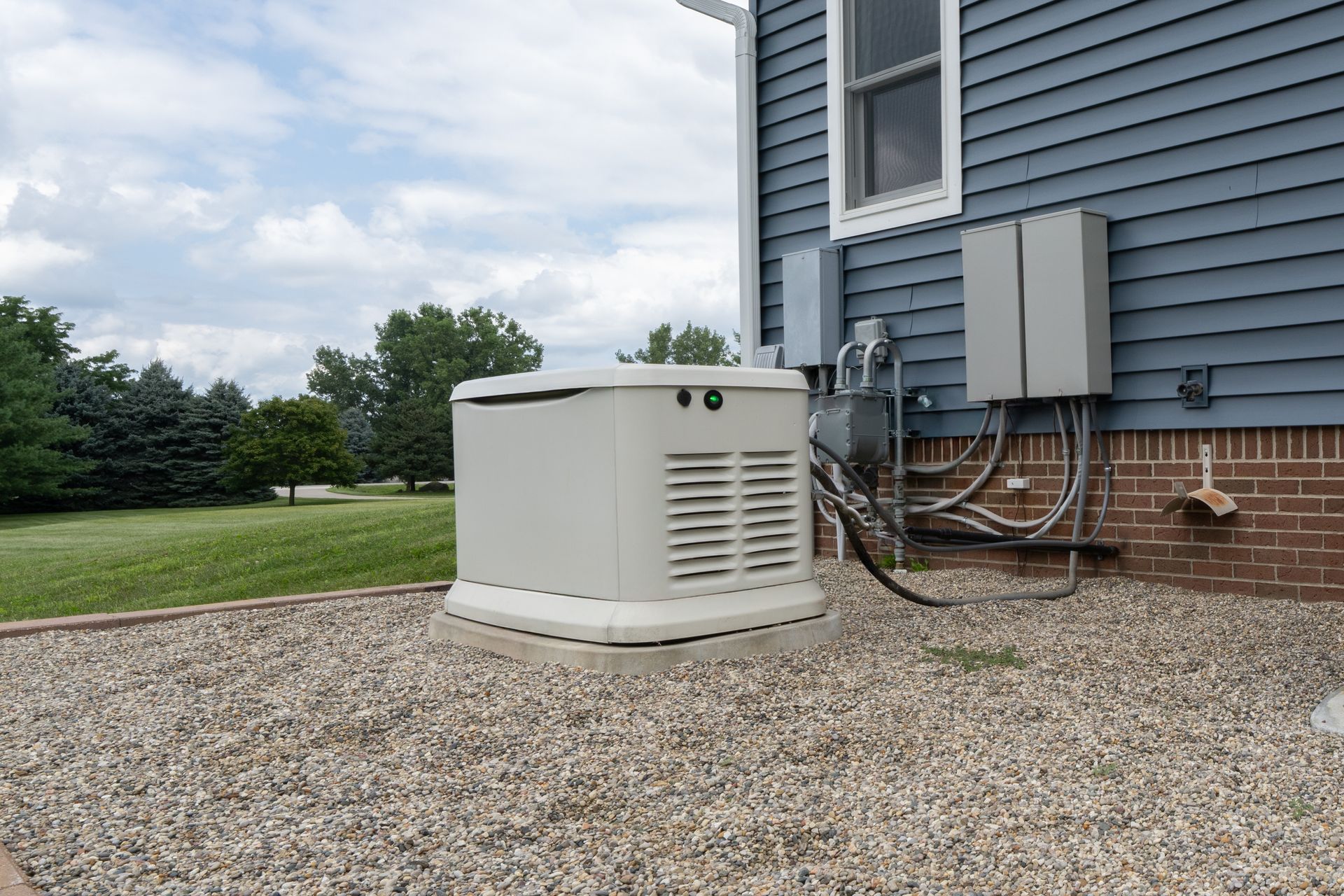
Advantage Electric installs and services generators to support backup power needs, handling wiring, transfer switches, and electrical integration to ensure the generator is safely connected and properly sized for your home or business. The work includes selecting a generator that matches your electrical load, installing a transfer switch that prevents backfeeding into the utility grid, and connecting circuits that you want powered during an outage. The installation is familiar with local weather-related power concerns and ensures that your generator operates reliably when you need it most.
If you are considering a generator for your Everett area property and want to ensure it is installed correctly and safely, contact Advantage Electric to discuss your backup power needs and schedule an installation evaluation.
What happens during installation and after the generator is running
The installation begins with evaluating your electrical panel and determining which circuits you want powered during an outage. Advantage Electric installs a transfer switch that disconnects your home from the utility grid and connects it to the generator when power is lost. The generator is wired to the transfer switch, and circuits are selected based on your priorities, such as refrigeration, heating, water pumps, or medical equipment. In Everett, many homeowners choose whole-house generators that power the entire home, while others opt for standby systems that cover essential circuits only.
Once the generator is installed and tested, your home automatically receives power within seconds of a grid failure. Lights stay on, your furnace continues to run, and appliances operate as if utility power were still available. You will notice that the generator starts without intervention and that power transitions smoothly without damaging sensitive electronics or causing flickering. When utility power returns, the transfer switch automatically reconnects your home to the grid and shuts down the generator.
Advantage Electric also ensures that the generator is properly sized to handle your electrical load without overloading, and that all wiring meets code and manufacturer specifications. Ongoing service includes testing the transfer switch, inspecting connections, and verifying that the generator responds correctly during simulated outages. The system is installed to operate safely and reliably for years with minimal maintenance.
Homeowners often ask these before scheduling installation
Homeowners considering generator installation often have questions about how the system works, what size is needed, and how it integrates with their existing electrical setup.
Advantage Electric installs and services generators throughout Everett and surrounding cities, helping homeowners and businesses prepare for power outages with backup systems that operate safely and reliably.
If you are ready to install a generator or need to schedule service for an existing system, get in touch to discuss your backup power needs and coordinate installation.