
New Wiring Installed to Code and Built to Last
Safe, code-compliant electrical wiring and installations for homes and businesses in the Everett, Washington area.
You need new wiring when you are adding a room, finishing a basement, remodeling a kitchen, or replacing outdated electrical systems that no longer meet code. In older homes throughout Everett, original wiring may lack the capacity to support modern appliances, or it may use materials like cloth insulation or aluminum conductors that create safety concerns. New construction and remodels also require wiring for lighting, outlets, appliances, and dedicated circuits for equipment that pulls higher loads like ranges, dryers, or EV chargers.
Advantage Electric performs electrical wiring for new installations and upgrades in residential, commercial, and remodeling projects across Everett and surrounding areas. This includes running wire for outlets, circuits, panels, lighting, appliances, and dedicated equipment lines. The work uses quality materials like copper conductors, properly rated breakers, and secure mounting methods that prevent future failures. If your home is older and needs partial or full rewiring, the job is planned to minimize wall damage and completed in stages if needed to keep parts of the house powered during the work.
If your project in Everett, Mill Creek, Bothell or a neighboring community requires electrical wiring or you need to replace outdated systems, get in touch with Advantage Electric to go over the scope and schedule the work.
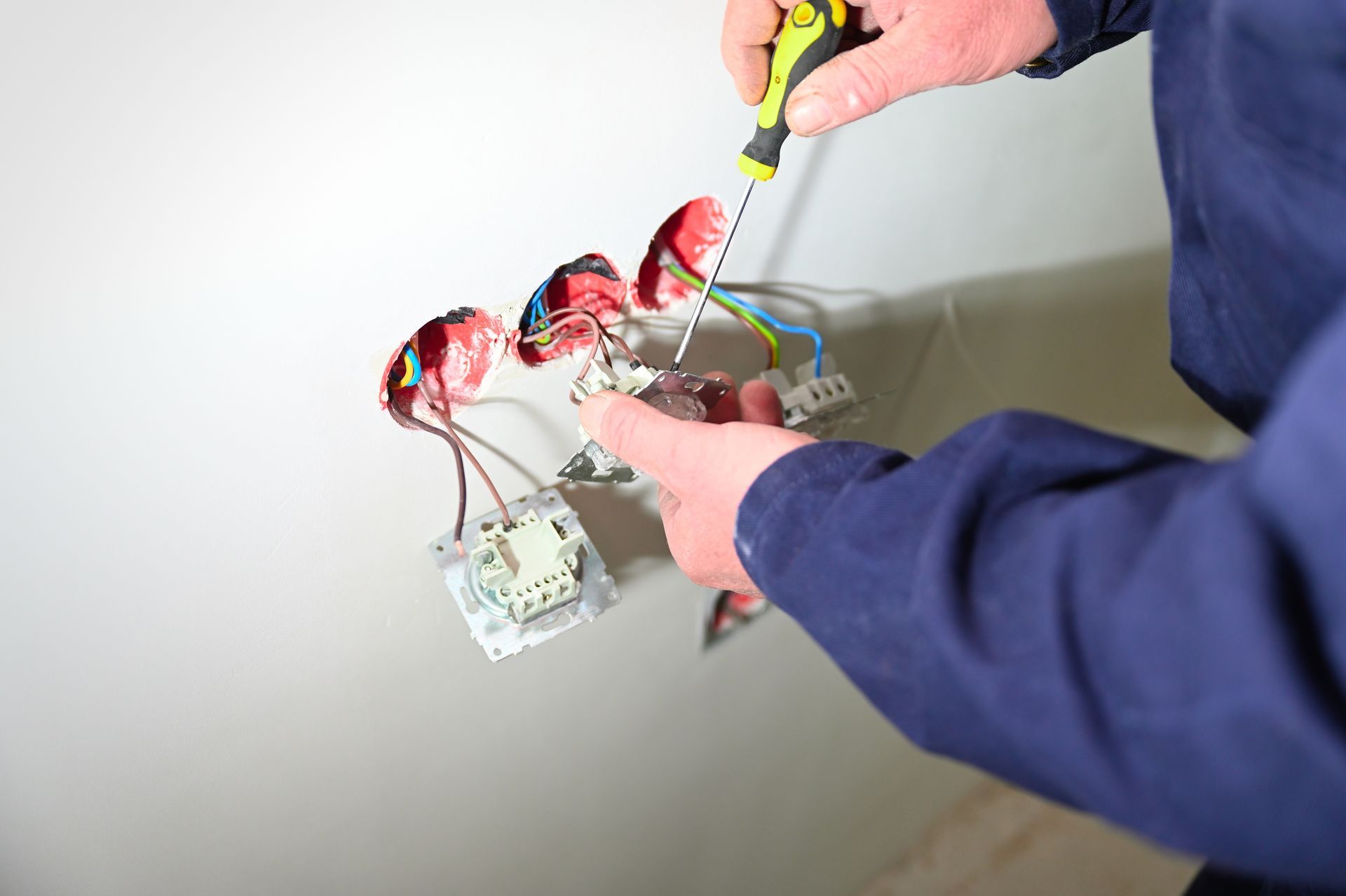
How Wiring Is Routed and Connected
The electrician maps out the circuit layout based on what you are installing and where power is needed. Wire is then routed through walls, ceilings, or conduit depending on the structure and whether walls are open or closed. In Everett homes with older framing, this sometimes requires drilling through studs or fishing wire through existing cavities to avoid cutting large openings. For remodels or additions, wiring is installed before drywall goes up so everything is accessible and properly secured.
After the wiring is complete, you will have outlets that deliver power where you need it, lighting that operates on dedicated switches, and circuits that do not overload when multiple devices run at the same time. Appliances that require dedicated lines will have their own breaker and wire rated for the load they draw. All connections are made inside junction boxes, and wire is stapled at the required intervals to prevent sagging or contact with sharp edges.
The electrician will also label circuits at the panel so you know which breaker controls each part of the house or building. If the job involves replacing old wiring, the outdated wire is disconnected and removed from active circuits to prevent any future confusion or hazards. Some areas may require inspection before walls are closed, and the electrician will coordinate that step if applicable.
What people ask when planning wiring projects
These are the questions homeowners and contractors ask most often when wiring needs to be installed or replaced as part of a larger project.
Advantage Electric handles wiring for new installations and upgrades throughout the Everett area, using proven methods and quality materials that meet code and last for years.
If your project requires electrical wiring or you need to replace outdated systems, contact Advantage Electric to review the work and set up a time to get started.